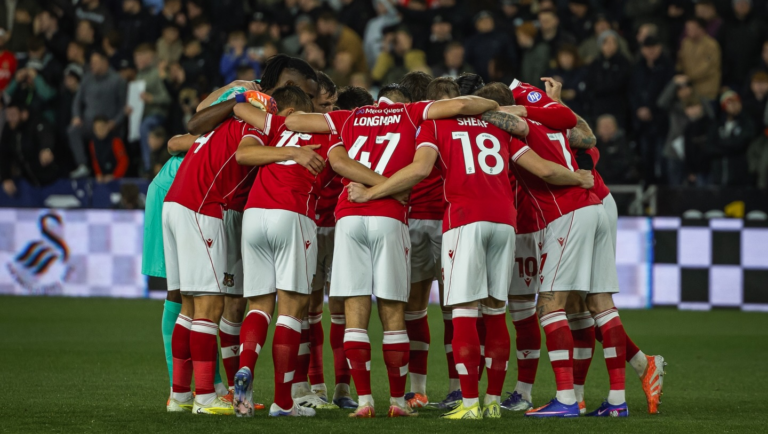
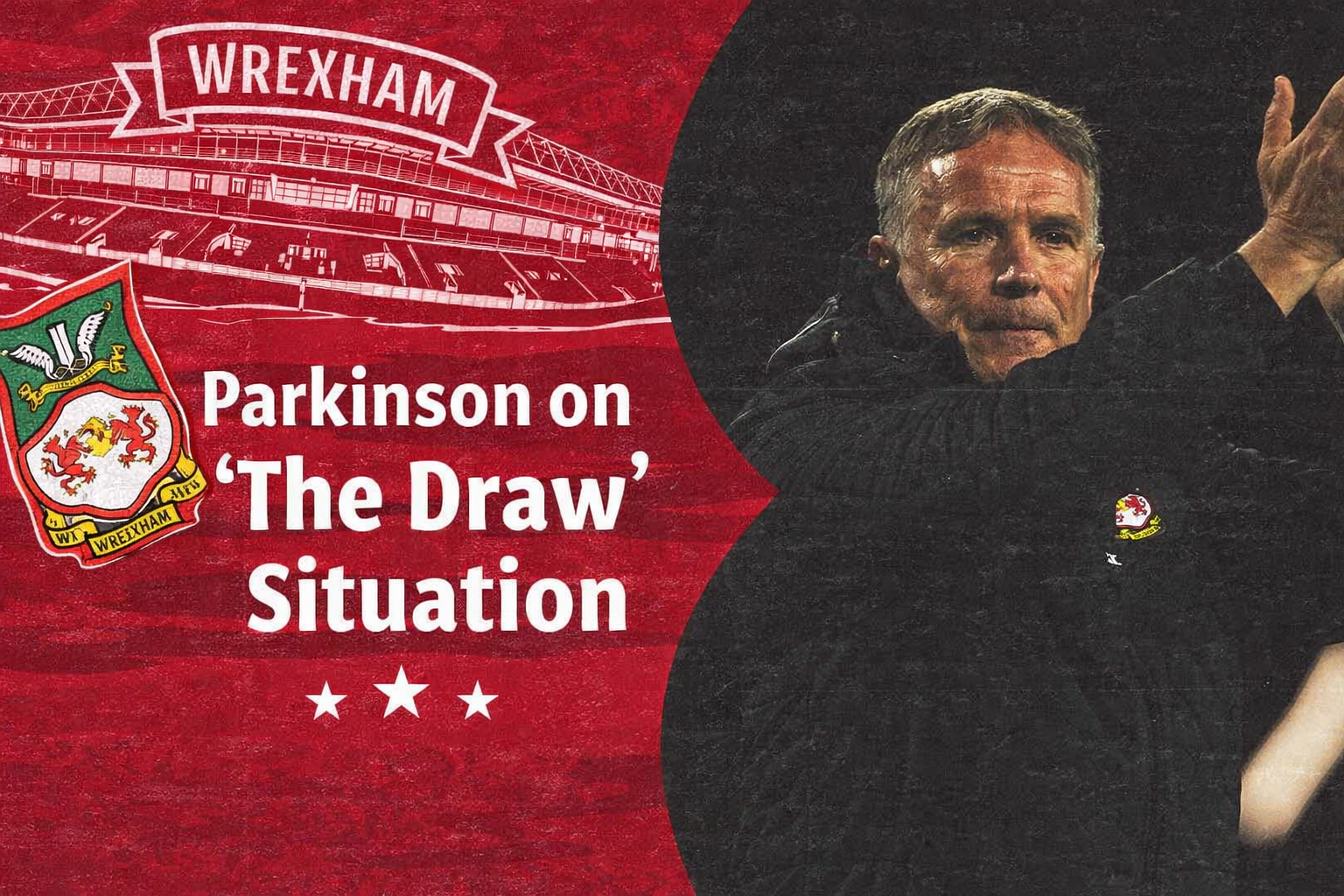
Phil Parkinson ahead of Swansea.
Phil Parkinson stood in front of cameras and did something few managers willingly do: he admitted the problem out loud. Wrexham’s habit of drawing matches is costing them points, costing them league position, and creating a gap between what they’re capable of and where they actually sit.
The manager didn’t dance around it when asked how to turn draws into wins. He acknowledged the issue exists, but his answer revealed the real dilemma facing Wrexham heading into Friday’s Welsh derby at Swansea.
One defeat in 11 games proves Wrexham are doing something right. They’re competitive in every match, resilient when under pressure, and structured enough to avoid the collapses that plague newly promoted sides.
Competitive doesn’t mean clinical
Phil Parkinson’s words carry weight because they’re factual. Wrexham have drawn 10 of their 21 Championship matches this season, more than any other side in the English Football League.
The manager knows where the problem lies. When asked directly about turning draws into wins, his response was telling.
“We’re competitive in all the games which is obviously what we expected to do and what we’ve worked hard to achieve but yeah we have had those draws and defining moments,” Parkinson explained. “The performance level on Saturday was good. I don’t think we can take anything away from the lads.”
Those defining moments are the difference between mid-table and the play-offs. They’re the chances Wrexham create but don’t finish, the late leads they concede, the points that slip away despite controlling periods of matches.
Saturday’s match against Watford ended 2-2 after Ollie Rathbone’s stoppage-time equaliser. Parkinson pointed to the quality of chances his side created, defending their approach even as the draws pile up.
But quality without conversion is the exact issue. Being competitive keeps you in games; being clinical wins them.
Supporters trust the process despite frustration
Wrexham fans responded to Parkinson’s pre-match interview with the same understanding that defines their relationship with the manager. One supporter captured the mood perfectly, noting that while the manager’s gut probably churns like theirs does, he comes across cool, calm, and level-headed with a business-as-usual persona until game time brings the enthusiasm.
That trust matters because it gives Parkinson room to stick with his approach rather than panic into changes. Another fan pointed out that Wrexham supporters can really relate to the manager because, like them, he arrived in 2021 and lived through every stage of the climb.
The connection between manager and fanbase creates stability that newer Championship clubs often lack. Wrexham’s supporters understand what Parkinson has built because they watched him build it, which means they’ll back the system even when results frustrate.
Changing the approach risks losing what works
The tension in Parkinson’s response is obvious. He’s built a team that rarely loses, that competes physically and mentally at Championship level, that doesn’t fold under pressure from bigger clubs.
Breaking that system to chase more goals could expose the defensive stability that’s kept Wrexham competitive. One defeat in 11 matches doesn’t happen by accident.
Ryan Hardy’s knee injury removes another attacking option just as Wrexham need to find more cutting edge. Parkinson confirmed the striker would face a spell out after falling awkwardly on his knee, limiting rotation options at a crucial moment.
Friday’s fixture at Swansea carries extra weight beyond three points. Parkinson made the significance clear when discussing what the derby means.
“To be the pride of Wales is very very important and we’re going to go all out to achieve that,” he said. “These are the games we’ve worked so hard to be involved in. There’s been so much work gone on at this club, so many supporters who’ve travelled up and down the country watching the team in the National League are absolutely savouring these days.”
Parkinson has acknowledged the draw problem exists, but his loyalty to the performance levels and competitive identity suggests he won’t tear it down to fix it. That means Wrexham’s path forward requires evolution, not revolution, and finding clinical edges within the system they’ve built rather than replacing it entirely.
About The Author