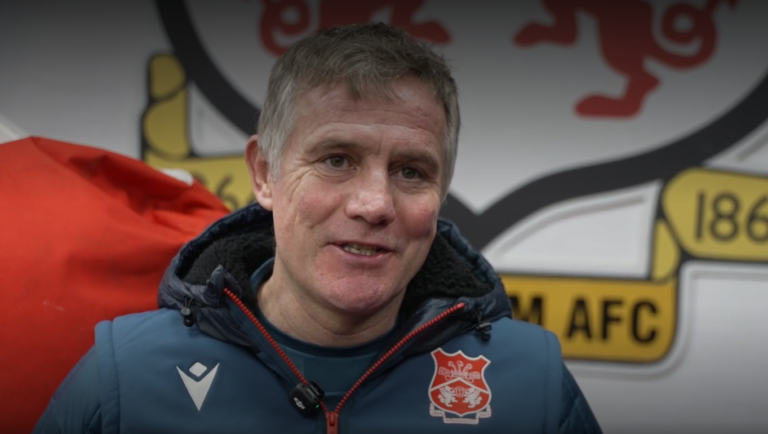
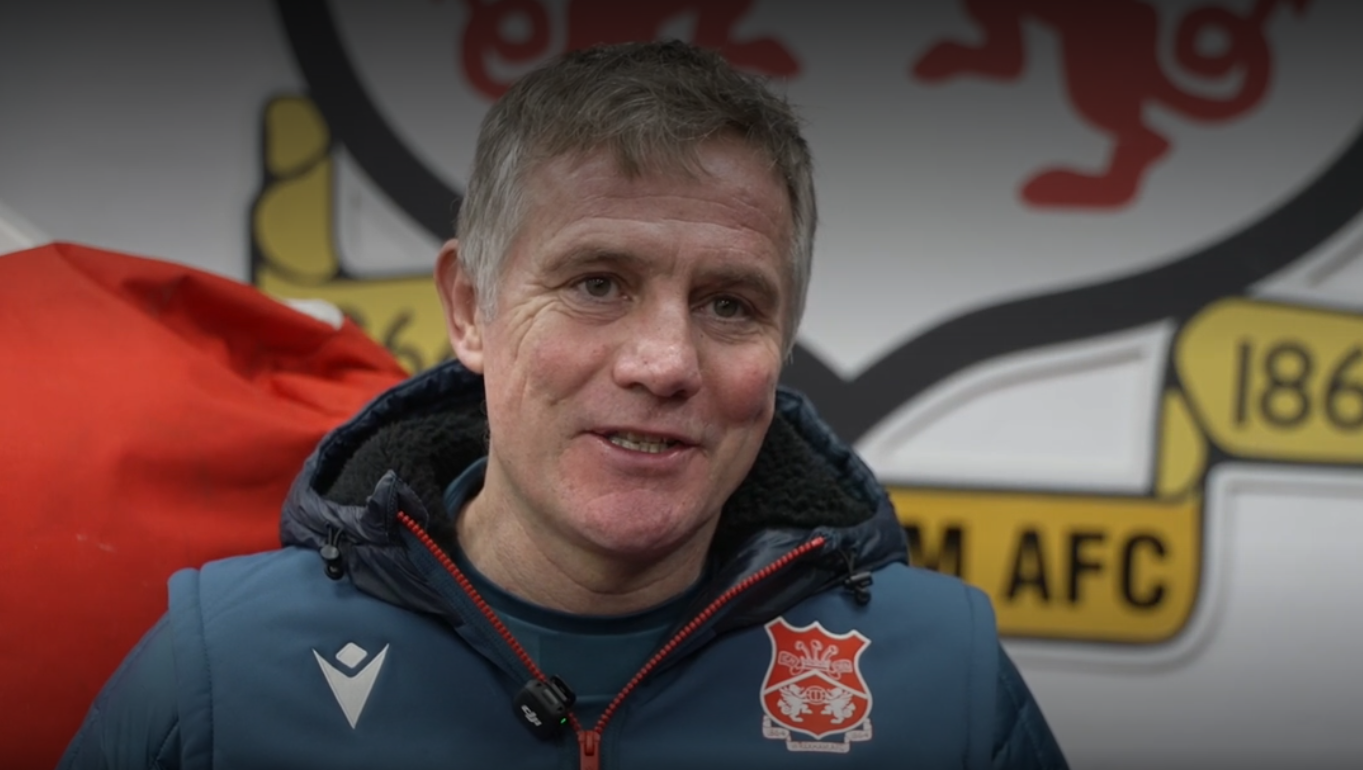
Phil Parkinson Interview. Credit - ESPN
Five years on from the takeover, Wrexham’s story is often told through promotions and momentum. For Phil Parkinson, the anniversary brings a quieter reflection on what sustained success actually demanded behind the scenes.
The results have been historic, but the lessons have not all been celebratory. As Wrexham accelerated through the divisions, Parkinson found that winning created pressures that went far beyond tactics or team talks.
Why success forced difficult decisions
Parkinson has been clear that the hardest part of the last five years was not climbing divisions, but managing what came next. Each promotion compressed timelines and forced decisions that would normally unfold over several seasons.
As standards rose, sentiment could not dictate squad building, even when players had been central to earlier success. Parkinson said the club had to make tough calls on players who had become club legends as Wrexham moved up levels.
Those decisions were not isolated moments but part of a wider pattern driven by pace. Three promotions in four seasons meant Wrexham could not afford gradual change without risking regression.
Players who delivered at one level were not guaranteed to fit the next, regardless of their contribution. The consequence was an accelerated cycle of exits that followed success rather than failure.
Phil Parkinson on the toughest lesson of the rise
In this interview, Phil Parkinson explains why managing change inside the squad became the hardest part of Wrexham’s progress. He reflects on the decisions success forced over five years and how those moments shaped the club’s rise.
Embedded via ESPN. Credit: ESPN.
How five years changed the nature of the job
The five-year span reshaped Parkinson’s role from promotion builder to constant decision maker. Squad evolution became a continuous process rather than an occasional reset.
Since the takeover, 66 players have arrived while 76 have left, most without transfer fees returning to the club. That level of churn reflects how quickly requirements changed as Wrexham climbed.
Transfer records rising from six figures to multi-million pound deals underlined the shift in expectations. Recruitment became about anticipating the next level rather than rewarding past performance.
Parkinson acknowledged that standing still was never an option during the rise. He explained that evolution was essential because any pause would allow rivals to move ahead.
Managing those exits demanded as much care as recruitment itself. Parkinson described the responsibility of handling departures with respect, knowing those players had carried the club through defining moments.
The emotional weight of those conversations increased as the spotlight grew. Success magnified every decision, adding scrutiny to choices that would normally remain internal.
Embed from Getty ImagesFive years on, the lesson Parkinson identifies is rooted in consequence rather than celebration. Progress required difficult human decisions made at speed, repeated across each promotion cycle.
As the anniversary arrives, Parkinson remains in charge having navigated those demands from the first steps upward to the present challenge. The rise has continued because those lessons were learned and applied, season after season.
About The Author