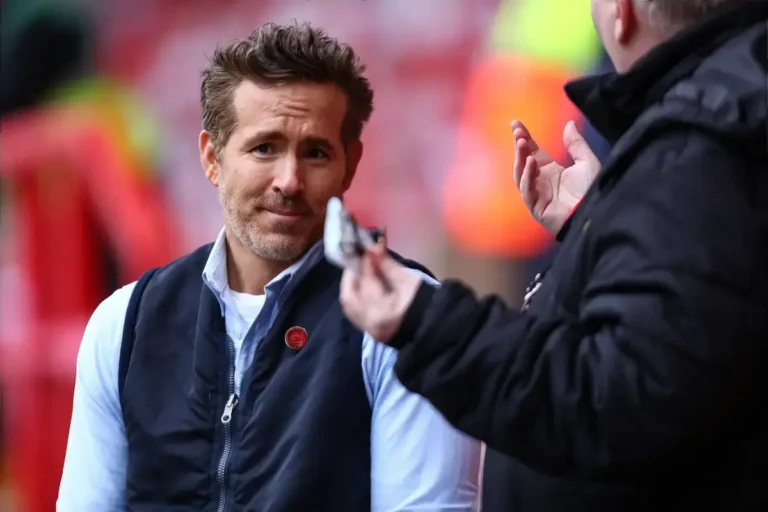
Wrexham’s rise under Ryan Reynolds and Rob McElhenney since their 2021 takeover at the Racecourse Ground is now being recognised beyond the club, with former Wales international James Chester highlighting their impact in 2026.
The club’s progress through the leagues has been matched by growth off the pitch, with investment, infrastructure and global reach all developing together.
That wider picture is now being acknowledged externally, with Chester’s assessment reflecting how Wrexham are viewed across the game.
His comments focus not only on results, but on how the club has evolved while maintaining its identity.
They also offer insight into why Wrexham continue to attract attention from players and supporters alike.
External voices underline ownership impact
Chester questioned whether Wrexham’s ownership could now be considered among the strongest in football, in comments reported by GOAL.
He said:
“Are Ryan Reynolds and Rob McElhenney the best owners in football? It’s a difficult one. I think there’s been lots of really good owners throughout football but I think for what they’ve done for Wrexham as a club, and the town as well, it was always a football club with a lot of history, long before the owners came in, but to see where the club had fallen to and how they turned that around has been really impressive.”
His assessment reflects the scale of change since 2021, with Wrexham moving forward on and off the pitch.
That progress has been built through consistent backing and a clear long-term approach.
Global growth without losing local connection
Chester also pointed to the balance between international growth and local identity.
“Then you have the attention that they’ve brought on the club from further afield and what that’s done for the people of Wrexham and the fans locally.”
Wrexham’s global profile has expanded significantly in recent seasons, supported by commercial growth and wider exposure.
Despite that, the connection with the local community has remained central.
“I think just looking at it from an outside perspective, I think they see how important that relationship is with the local people and the fans who have always been there rather than solely focusing on the success that they’ve had with newer fans around the globe.”
That balance continues to shape how the club is perceived both within the game and beyond it.
Why Wrexham has become a destination club
Chester’s own experience reflects the growing appeal of the project.
He revealed he attempted to secure a move to the Racecourse over several years.
“I think I tried my best to get signed by Wrexham for about three years!”
That interest came despite limited playing time elsewhere, with Chester actively seeking involvement in the club’s environment.
He described how contact was made following a training match involving Wrexham’s under-21s.
The move did not materialise, but the experience underlined the club’s pull.
“I don’t think there’s a much more exciting football club to be involved with in world football at the moment than Wrexham with the ownership that they have and it was something that I was really hoping would happen.”
Backing on and off the pitch shaping progress
The ownership model has also been recognised internally, with manager Phil Parkinson highlighting the level of trust provided, as reported by BBC Sport.
He said:
“They’re invested in all of the decisions, but they trust us… that’s why we’ve had success.”
That structure has allowed Wrexham to build consistently, combining recruitment, stability and long-term planning.
The approach has supported progress through the leagues while maintaining a clear identity.
External recognition now reflects what has been developing over recent seasons at the Racecourse.
Wrexham’s model continues to evolve, but the balance between ambition and connection remains at the centre of that progress.
About The Author