Wrexham's stadium plan puts public investment under scrutiny. Credit: Wrexham AFC
Wrexham have become one of English football’s most discussed stories, with ambitions of Premier League football already taking shape. Now competing in the Championship, the Welsh side are building towards a future that reflects their rapid rise through the divisions.
The takeover by Ryan Reynolds and Rob McElhenney in 2021 set a clear direction. What followed was historic: Wrexham became the first club to win three consecutive promotions across England’s top five tiers. That progress drove the club’s market valuation up by roughly 5,000% during the same period.
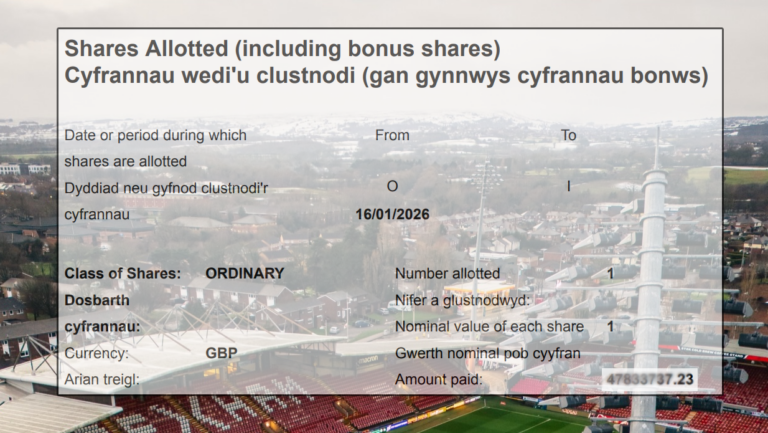
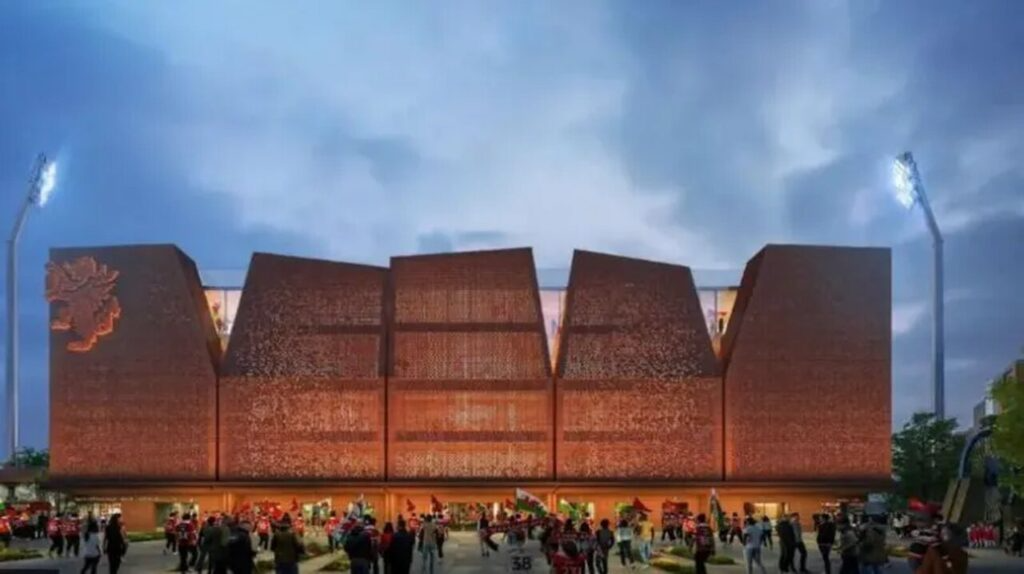
Off-field development has matched the pace on it. Work began in June on modernising the Racecourse Ground, bringing the stadium in line with UEFA standards required for international fixtures.
Central to the project is the reconstruction of the Kop stand, which will hold 5,500 seats and include provisions for future expansion. The plans have attracted backing from the Welsh government, sparking broader debate around public investment in football infrastructure.
Culture Minister Jack Sargeant has championed the proposal, supporting the release of £18 million to fund stadium improvements. He argued the investment extends beyond football, pointing to job creation and wider economic benefits for the city.
“We have seen Wrexham thrive thanks to football and the community. It’s a big undertaking that encompasses the whole city,” Sargeant said.
The new stand is scheduled for completion by June 2026, positioning the club for life at a higher level. On the pitch, though, Wrexham currently sit 15th in the Championship table—a reminder that ambition must be matched by results.
Despite institutional support, the use of public money has drawn criticism. Sargeant defended the decision during an appearance on Politics Wales, describing the project as transformative for the region.
“It’s a really big undertaking in the heart of Wrexham, it spans the whole town, it’s the gateway project,” He added.
Planned work also includes upgrades to floodlights, the pitch, and other facilities, ensuring the venue meets standards for hosting international events.
Wrexham AFC stated the project could drive job creation and strengthen the local economy through increased visitor numbers. Critics, however, question whether public funds should support a venture considered commercially viable on its own.
The discussion has elevated Wrexham’s profile both nationally and internationally, returning focus to the club beyond match days. It adds another layer to the Reynolds and McElhenney era—one that now involves politics, economics, and urban development alongside football.
About The Author