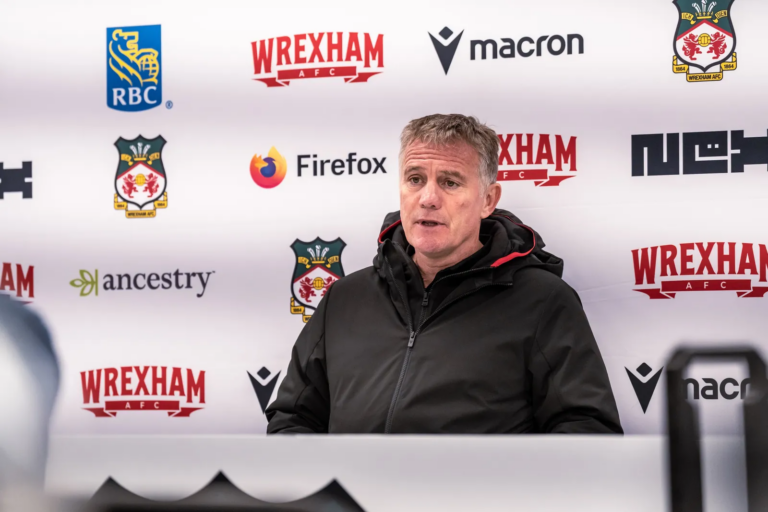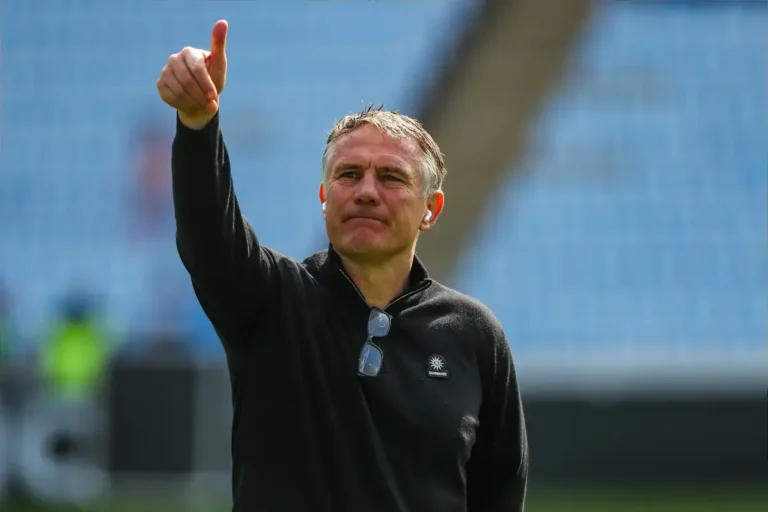
Humphrey Ker has left Wrexham after more than five remarkable years, with the club announcing on Friday, September 25, that he is stepping down from both the club board and the Wrexham AFC Foundation board.
His departure offers a chance to look beyond the cameras and comedy and consider how much of Wrexham’s modern story carries his fingerprints. Rob McElhenney and Ryan Reynolds transformed the club, Phil Parkinson delivered the football success and the players won the promotions, but some of the biggest moments might never have happened without Ker.
1. Rob McElhenney might never have wanted to buy a football club
Before Wrexham, there was the idea, and Ker played a central part in that too. He introduced McElhenney to Sunderland ‘Til I Die, later explaining that the documentary blew his friend’s mind by showing the relationship supporters in Britain have with their football clubs.
That fascination eventually led to the extraordinary suggestion that McElhenney should buy one himself. Without Ker putting that programme in front of him, there is every chance the conversation which eventually changed Wrexham never even starts.
2. Wrexham might not have been the club they chose
Once McElhenney became serious, Ker did the homework. Using Google, Wikipedia, club websites and Football Manager, he built what he admitted was a fairly unscientific scoring system to compare potential clubs.
Wrexham topped his list with 38 points from 50, ahead of Hartlepool United. Carlisle United and Aldershot Town were also considered, but the Racecourse, the fanbase, the club’s history and its place within the community all helped Wrexham stand out.
3. Rob and Ryan would not have had the same man on the ground
Ker’s involvement did not end with the takeover. As Executive Director, he became the owners’ representative in North Wales, an important role when two Hollywood figures based thousands of miles away were learning the realities of running a fifth-tier football club.
His early remit was straightforward: report back on what Wrexham needed to build and what needed to be done. He also became something of a translator between football cultures, famously having to explain that the team should not be called the “Wrexham Red Dragons”.
4. Phil Parkinson might never have become Wrexham manager
It was not Ker’s decision alone, but he was part of the process which led to arguably the most consequential football appointment of the new era. When Parkinson arrived in July 2021, Wrexham’s official announcement credited Ker, Les Reed, Shaun Harvey and Fleur Robinson with putting together the recruitment process.
Ker later called hiring Parkinson and giving him control the “single greatest thing” the ownership had done. Three successive promotions provide the obvious context for why he felt so strongly.
5. Wrexham’s rapid growth might have looked very different
The glamorous part of Wrexham’s rise has always been the football, but Ker repeatedly spoke about the less visible challenge of making sure the club itself could keep pace. In 2024, he compared the process to building a rocket ship while trying to pilot it out of the atmosphere.
He also pushed for infrastructure to catch up with the first team as Wrexham climbed the pyramid. His role changed as experienced executives arrived and the operation became increasingly sophisticated, but that evolution itself shows how far the club travelled from those early National League days.
Ker did not score the goals, pick the team or fund the takeover, but his influence sits unusually close to the beginning of almost everything. Wrexham’s modern story belongs to many people, yet without him it is difficult to imagine it unfolding in quite the same way.
About The Author