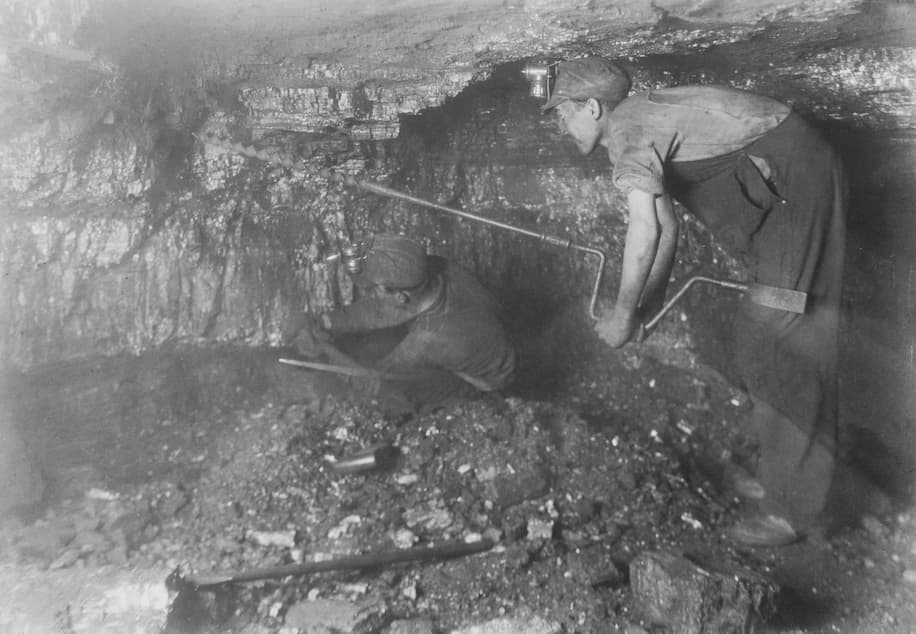
From Pitheads to Penalty Areas: Is There a Link Between Industry and Football’s Oldest Clubs?
As you know, I was born in Nottingham so it is with some interest that I watched the rivalry between Wrexham AFC and Notts County, the FA Cup match against Nottingham Forest, and some must-win matches against Mansfield Town, another Nottinghamshire club.
And I began to wonder. Whilst football rivalries are usually explained by geography, league tables or memorable encounters on the pitch, do some rivalries seem to hint at something deeper?
Because when you look at it, Notts County is the second oldest football club in the world and Wrexham the third oldest. And when you add in the oldest club in the world, Sheffield FC (Not Sheffield United or Sheffield Wednesday) a pattern begins to emerge.
The clubs emerged from communities shaped by industry. Places where coal, iron and hard work defined everyday life.
Is it possible that the industries which transformed these towns also helped create the conditions for football to flourish?
There may never be a definitive answer. But it is a question that fascinates me.
The World’s Oldest Clubs and Industrial Britain
Sheffield FC, founded in 1857, is recognised as the world’s oldest football club. Notts County followed in 1862, becoming the oldest professional club in the world. Wrexham AFC, founded in 1864, is the oldest club in Wales and the third oldest professional club in existence.
All three share something beyond footballing history.
Wrexham grew through coal mining, iron production and later steelmaking. Sheffield was built on steel. Nottinghamshire became one of Britain’s great coal-mining counties.
These were places where industry shaped not only the economy but the identity of entire communities.
Thousands of people worked together, lived together and built a shared sense of belonging. Was football simply another expression of that collective spirit?
Wrexham: More Than Coal and Iron
The story of Wrexham cannot be separated from industry.
Poems from the 1400s mention Wrexham as being full of the sound of nails being hammered. It was known for iron bucklers for shields (the dome bit in the middle). The Earl Grosvenor had mines up by Worlds End above Minera as far back as the 1600s.
Since then, the rich coal seams of North East Wales supported communities for generations. Bersham became one of the most important iron-producing sites of the Industrial Revolution. Later, steelmaking helped sustain our local economy and identity.
The industries have changed, but their legacy remains visible in the character of our town.
Industrial work demanded resilience. It required teamwork. It fostered loyalty to colleagues and pride in place.
Those qualities could just as easily describe football supporters.
Perhaps that helps explain why Wrexham AFC has retained such a powerful connection with the town, and now city, through good times and bad.
Nottinghamshire: A County Built on Coal
The same themes can be found across Nottinghamshire.
For much of the nineteenth and twentieth centuries, coal mining shaped the county’s landscape and communities. Pit villages developed strong identities, often centred around shared work and mutual support. My own grandad left his hometown of Wigan and moved to Nottingham to find work in the mines. Two of his sons, my uncles, followed him into Gedling Colliery.
Notts County and Nottingham Forest emerged from this environment, while Mansfield Town became closely associated with one of the county’s most significant mining areas.
Football clubs offered more than entertainment. They became symbols of local unity.
In communities where livelihoods and even life itself were uncertain, and work was demanding, did football provide a common cause? A shared badge? A shared story?
Sheffield: Where Football Was Forged
Sheffield’s place in football history is unique.
The city not only gave the world its oldest football club but also helped shape many of the early rules of the game.
At the same time, Sheffield was one of the great industrial powerhouses of Britain.
The city’s steel industry became famous around the world. Its workshops and factories attracted skilled workers, innovators and entrepreneurs.
I am tempted to see a connection.
Industrial cities created organised communities. They established clubs, societies and institutions. They brought people together and in an industry such as the mining one where you had a quota each day, competition was naturally fostered. And football thrived.
The Rise, Fall and Revival of Industrial Communities
Perhaps the strongest connection between industry and football is not found in the 1800s but in what happened afterwards.
Across Wrexham, Nottinghamshire and Sheffield, industries that had once seemed permanent began to decline.
Mines closed, steelworks shut their gates and jobs disappeared.
Despite the difficulties, the communities have adapted. Here at Wrexham, our industrial estate is the third largest in Europe. If you are on the Holt Road at rush hour, or at shift change, it is not so much the ‘clatter of clogs’, but the glow of brake lights.
Football clubs have often experienced similar struggles. Yet remarkably, the clubs survived.
In many cases, supporters became the custodians of local identity when much of the traditional industrial landscape had vanished.
The pithead may have disappeared. The furnace may have gone cold.
But the football club remains.
On matchdays, thousands still gather to celebrate the place they call home.
Coincidence or Connection?
There is no evidence that coal mines created football clubs or that steelworks automatically produced successful teams.
Yet I find it difficult to ignore the similarities.
Some of football’s oldest clubs emerged from industrial communities. Many endured the decline of those industries. And many continue to act as symbols of civic unity long after the workplaces that once defined their towns have disappeared.
Perhaps football’s oldest clubs did not emerge despite the smoke, noise and hardship of industrial Britain.
Perhaps they emerged because of it.
The coalfields of Nottinghamshire, the steelworks of Sheffield and the iron and coal industries of Wrexham created more than jobs. Certainly here in Wrexham communities grew up with strong identities and a shared sense of purpose.
And communities, sooner or later, create football clubs.
The next time Wrexham face a team from Nottinghamshire or Sheffield, supporters may see only ninety minutes of football.
Yet beneath the chants and rivalry lies a shared story, a shared history.
A story forged in coal, iron and steel.
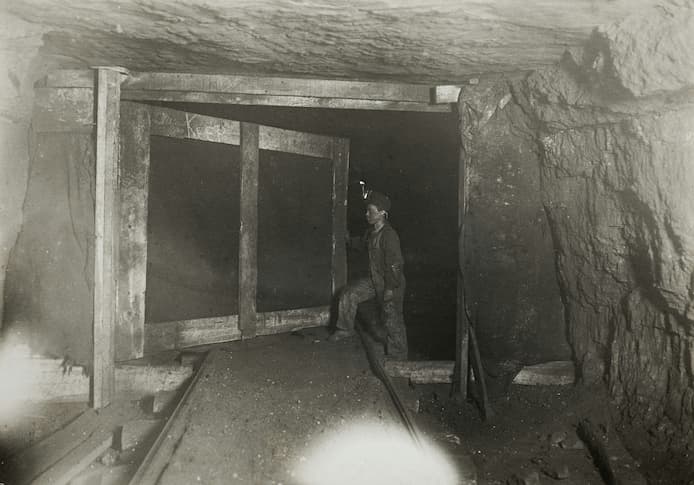
Photos by Art Institute of Chicago on Unsplash
About The Author