

Credit - Populous
The persistent suggestion that Wrexham’s Kop Stand rebuild has suffered from delays is contradicted by the facts of the necessary infrastructure work that has taken place since the end of last season.
The club has now confirmed that main contract work is able to start following the completion of these initial, non-negotiable phases.
Fans often fixate on visible progress, ignoring the complex requirements of preparing the site for a major new build. CEO Michael Williamson was explicit regarding the work required just to get a foundation in place. The entire process was defined by a critical sequence of utility and civil engineering tasks, all of which had to be fully resolved. The project’s actual goal is not immediate impact, but a successful final outcome for the long term.
Embed from Getty ImagesThe Essential Sequence
The entire site required comprehensive preparatory work before the main construction could begin. This essential work was not visible to the public but was crucial for the project’s success. The necessary sequence included building a new substation to power the student accommodation located adjacent to the stadium.
Completing the substation was the trigger for the next critical step. This essential development allowed for the subsequent removal and rerouting of the live power cable that dangerously ran directly across the Kop site. Michael Williamson noted that this utility work was the greatest hurdle, stating the relocation allowed us to pull up the infamous power cable that had unnecessarily complicated the site for years.
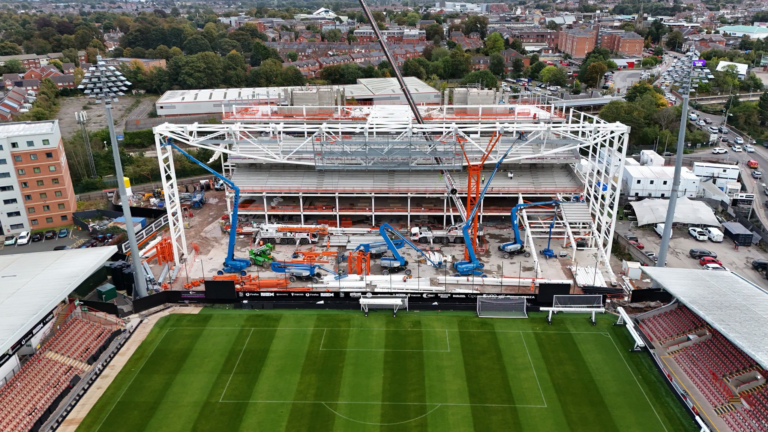
With the utilities finally resolved, the immediate focus shifted to preparing the physical ground for the structure itself. McLaren Construction then quickly commenced enabling works, including the huge task of excavating earth and preparing the area. This excavation created a crucial flat area ready for the construction of a platform where the essential piling rig will sit.
Williamson confirmed that the enabling work could not commence at an earlier date, regardless of internal or external pressure. This preparatory phase could not start until the new pitch was complete and fully operational. Installing the advanced pitch ahead of the 2025-26 campaign was a mandated priority that directly influenced the entire construction timeline.
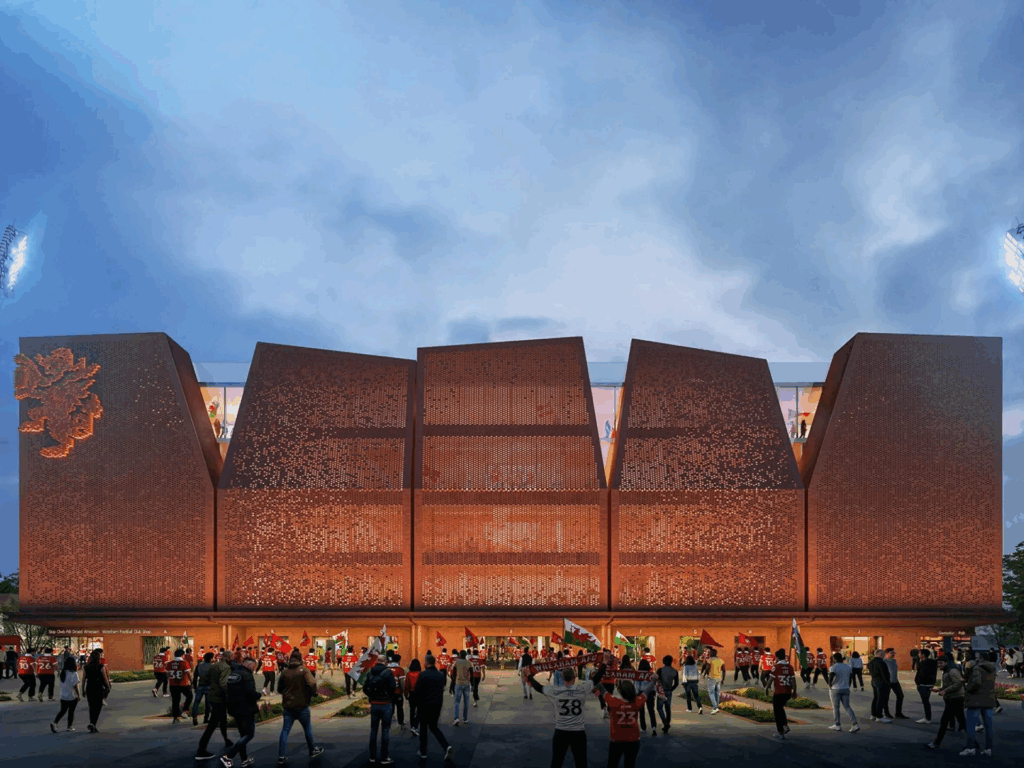
These preparatory steps included the significant upgrade on the pitch, including underground heating and the installation of the stitch pitch. Relocation of the dugouts and installation of new TV gantries were also part of this mandatory infrastructure work. All of these required tasks had to be signed off before the Kop work could safely accelerate. The fact that main contract work is beginning confirms all preceding logistical and utility hurdles have been successfully navigated by the club’s staff.
Quality Over Speed
The current progress report establishes a clear and necessary priority for the club: correct and flawless execution must take precedence over rapid delivery. Williamson clearly stated that initial expectations for seeing the façade go up immediately were unrealistic due to the mandatory, invisible work that had to occur first. The club must ensure a proper, long-lasting foundation is laid before the main steel structure can successfully rise.
The club has maintained a steady public timeline for the completion of the entire project. The new stand is accurately due to be completed for the start of the 2026-27 campaign. This definitive target is the date that actually matters for supporters.
The separate deadline of the 2026 UEFA U19 finals will be met through existing stadium compliance and temporary seating. Williamson was direct about the temporary lack of a finished stand, confirming a “big, beautiful Kop stand” is not expected to be finished for the tournament itself. The stadium will still meet the necessary UEFA Category Three compliance required to host the games.
The emphasis remains firmly on the quality of the final construction and avoiding future errors. Williamson stressed the importance of making sure the project is “done right” because it is the only major stand being built from scratch. Rushing the work to appease impatient observers is correctly identified as a false economy that the club will not pursue.
This meticulously planned sequence has positioned the project for its first key physical milestone, the foundation work. Williamson confirmed that the pilings… are expected to go in within the next 30 to 45 days. This essential step will visibly put the main foundation in place, finally moving the project vertically.
The club is also progressing with its long-term ambition for the new structure, confirming the vision extends beyond the base plans. A planning application has been made to Wrexham County Borough Council to increase the stand’s capacity from 5,500 up to 7,500 seats. The club is building a long-term, high-capacity asset, not merely a replacement stand.
The initial focus on substation relocation, power cable removal, and site preparation was mandatory work to secure the project’s future. This foundation was necessary to safely manage the site and prepare for the pitch upgrade installed ahead of the 2025-26 season. The club’s refusal to rush this necessary sequence is an appropriate display of long-term planning, ensuring the new Kop Stand will serve the club without fundamental errors.
About The Author




People sometimes say Welsh taxpayers got nothing back from funding Wrexham, but that’s not really the full picture. The money was given as grants for regional regeneration, not as a loan or equity investment, so there isn’t a direct repayment mechanism. However, the wider economic impact looks significant. Reports suggest tourism and hospitality spending in the area increased by roughly £120 million over the last past three years, driven largely by the club’s rise and the global exposure.
That increased activity means more VAT, business taxes, and local employment. Even if you take a conservative view and assume roughly 15–25% of that spending ultimately flows back to the public sector through taxes, that would imply something like £18–30 million in tax revenues tied to the surge in local economic activity.
So while taxpayers haven’t been “paid back” directly (the grants weren’t structured that way), the indirect return could plausibly ALREADY be in the same ballpark as the public funding, depending on how much of the new spending is genuinely additional to the local economy.
Excellent insight, you sure know what you are talking about on the finances side of things.